George O. Jackson de Llano

NOTICIAS DE NEPANTLA

Febuary 27 2026 - April 2026


Curatorial Statement

English Translations of Curatorial Statement
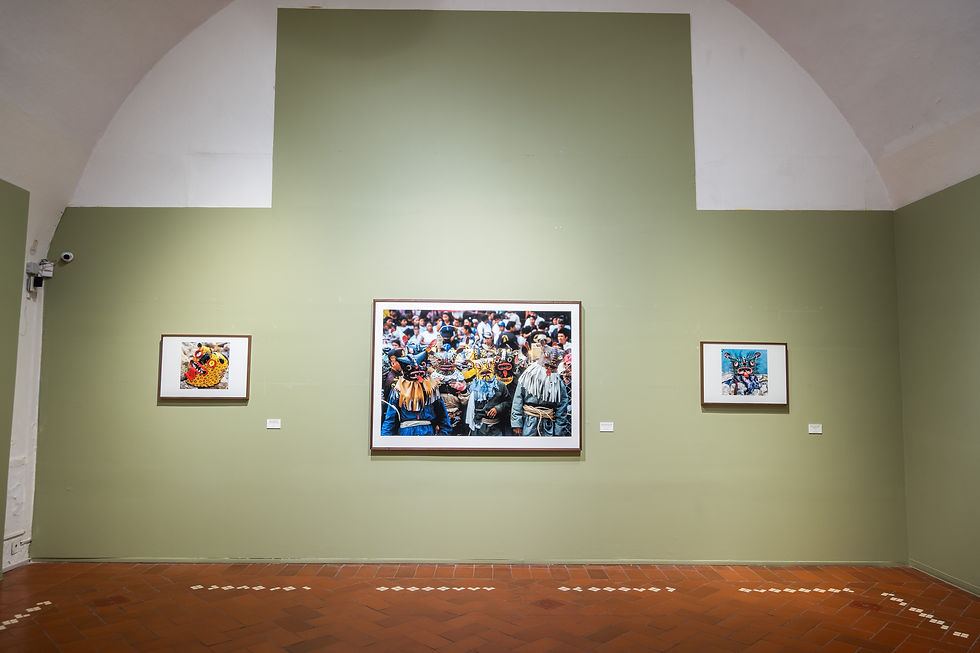
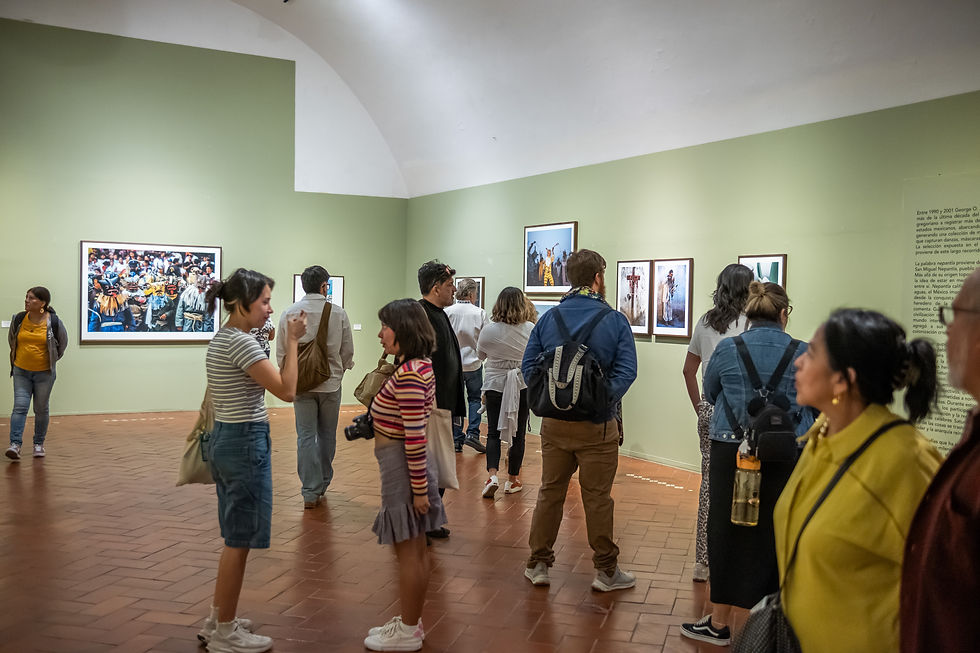
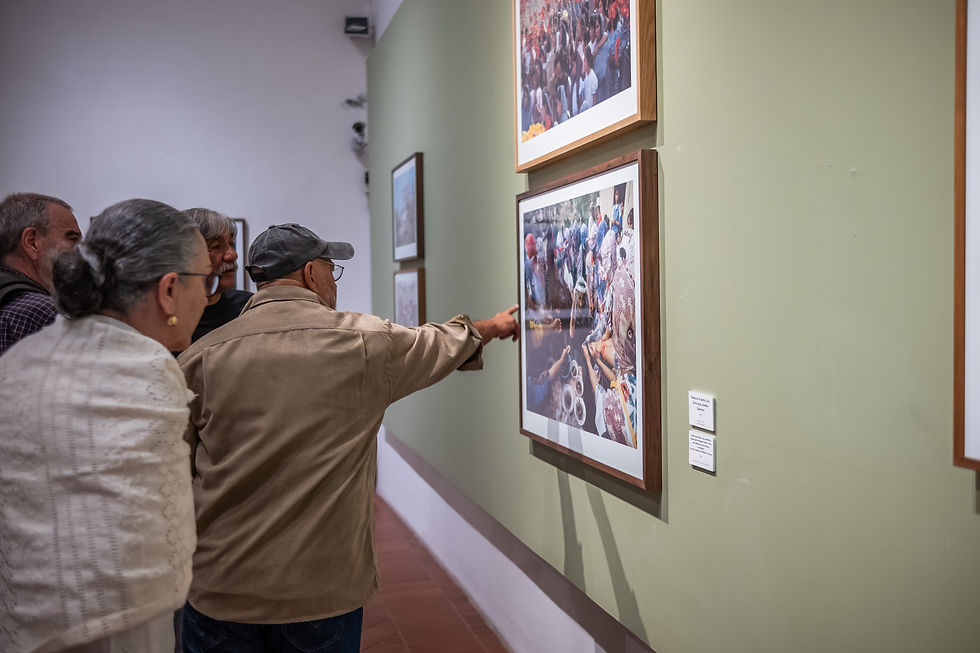
Between 1990 and 2001, George O. Jackson de Llano dedicated just over the last decade of the second millennium of the Gregorian calendar to recording more than 330 festivals across 23 different Mexican states. Encompassing over 60 distinct cultures, he generated a collection of more than 75,000 color images capturing ancestral dances, masks, costumes, and rituals. The selection exhibited at the Querétaro Museum of Art stems from this long journey across the country by an impassioned observer.
The word nepantla comes from Nahuatl and is related to San Miguel Nepantla, the birthplace of Sor Juana Inés de la Cruz. Beyond its toponymic origin, the word nepantla condenses the idea of being in the middle, between two mutually opposing societies. Nepantla characterizes this Mexico that navigates between two waters: the imaginary Mexico desired by economic elites since the conquest five hundred years ago, and the pre-Columbian Mexico, heir to the millennial Mesoamerican civilization, as discussed by Guillermo Bonfil Batalla in México profundo: Una civilización negada (Deep Mexico: A Denied Civilization), an iconic text published in 1987. It is this intermediate world—born of a historical syncretism that appended symbols introduced by Christian colonization onto its ancestral ones—that Jackson de Llano captures.
Although these festivals are supposedly of religious inspiration, there is no doubt that one of their declared objectives is a pagan, rather than prudish, way to propitiate the abundance and quality of the coming harvest. These popular festivals are heirs to the Saturnalia of ancient Rome dedicated to Saturn, the god of agriculture; to the Bacchanalia toasted to Bacchus, the god of wine; to the Feast of the Ass and the Feast of Fools; to the thunderous charivari of the Middle Ages; and to many other collective celebrations that have always served as a release for populations subjected to restrictive organizational norms and laborious lives. During these totally unbridled popular revelries, participants mingle without class distinction: renewal and regeneration are the order of the day. During the famous Saturnalia of Roman Antiquity, the natural order of things was disrupted and inverted: fools assumed power and anarchy reigned for several days in Rome.
The photographs taken by George O. Jackson de Llano at the end of the last millennium bear witness to the vitality of cultures that adapt to the perpetual movement traversing societies, without losing the essence transmitted since time immemorial.
Michel Blancsubé
Artist’s Acknowledgments
-
Prof. José del Val Blanco
-
Saúl Millán Valenzuela
-
Dr. Marion Oettinger
-
Jorge Pellicer López de Llergo
-
Margarita Orellana
-
José Manuel Pellicer
-
Rodrigo Rivero Lake
-
Alberto Ruy Sánchez Lacy
-
Miguel Sánchez-Navarro Redo
-
Marta Turok Wallace
Acknowledgments
-
Ministry of Culture of the State of Querétaro
-
Fabián Arnaud
-
Javier Gómez Mexican Image Laboratory (Laboratorio Mexicano de Imágenes)
-
Museum Professionals of Mexico (Museográficos de México)
-
David González Chirino
-
Iván Lomelí
-
Enmarcados México (Mexico Framing)
-
M108 Curatorship
-
Staff of the Querétaro Museum of Art
GALLERY